Halmahera vs. Raja Ampat: Choosing Your Next Indonesian Halmahera Liveaboard Expedition
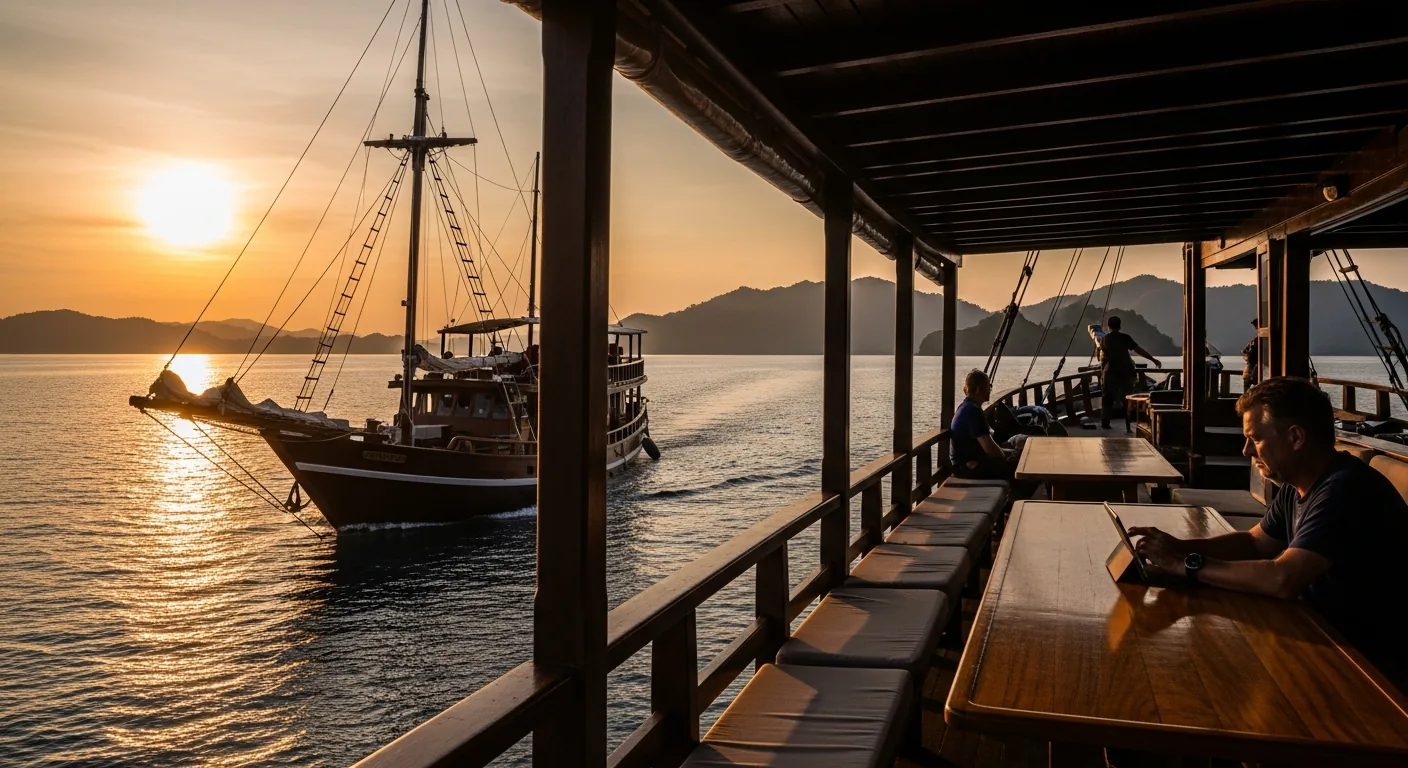
The water is a placid, impossible cobalt. Below, the reef slope drops into an abyss, its edge decorated with immense barrel sponges and gorgonian fans filtering nutrients from the current. A school of yellow-masked angelfish moves past. There are no other dive boats for 50 nautical miles. This isn’t a private charter in a well-known park; this is a Tuesday in the Halmahera Sea. For the expedition diver who has logged hundreds of hours in the celebrated waters of Raja Ampat, the question inevitably arises: what is the next frontier? The search for genuine exploration—for reefs that do not appear on satellite maps and marine life that seems unacquainted with divers—often leads to this archipelago in the North Maluku province. See also: book Contact.
The dilemma is a familiar one for the discerning traveler: choosing between established excellence and the allure of the undiscovered. Raja Ampat is the benchmark, a globally recognized epicenter of marine biodiversity. Halmahera, its neighbor to the west, remains an enigma, a destination spoken of in hushed tones by expedition leaders and marine biologists. Is it simply a less-developed version of its famous counterpart, or does it offer a fundamentally different, perhaps more profound, diving experience? This analysis is for the advanced diver weighing these two titans of the Coral Triangle, moving beyond marketing superlatives to compare the diving, logistics, and intrinsic character of each destination. See also: see Halmahera Liveaboard’s About.
Marine Biodiversity and Topography: A Tale of Two Archipelagos
To compare the underwater landscapes of Halmahera and Raja Ampat is to compare two distinct masterpieces. Raja Ampat’s reputation is built on staggering biomass and species counts, validated by Dr. Gerald Allen’s 2001 survey that identified 1,074 fish species at a single site. The diving here, particularly in the southern region of Misool, is characterized by dramatic soft coral gardens, vast schools of fish that blot out the sun, and a reliable presence of oceanic manta rays at established cleaning stations. Sites like Magic Mountain or Boo Windows are cornerstones of Indonesian diving for good reason; they deliver consistent, high-voltage encounters. See also: Halmahera Liveaboard.
Halmahera diving, conversely, is a narrative of discovery. The region sits at a critical junction where the Indian and Pacific Oceans converge, creating a unique species blend. “In Halmahera, we are still in an exploratory phase,” notes Marco Rossi, an expedition leader who has spent over a decade charting the Maluku islands. “While Raja Ampat offers density, Halmahera offers peculiarity. We’re finding species here with unusual color morphs and observing behaviors not documented elsewhere. The topography is volcanic, creating black sand muck diving sites reminiscent of Lembeh Strait, which then give way to vertical walls covered in pristine hard corals just a few kilometers away.” See also: Halmahera Dive Sites.
A key differentiator is the prevalence of certain ecosystems. While Raja Ampat has its share of muck diving, Halmahera’s volcanic substrate provides a more extensive and varied environment for macro photographers. Sites around the island of Tifore are known for congregations of schooling barracuda and jacks, while the black sands of Galela Bay can yield Rhinopias, ghost pipefish, and a dozen species of nudibranch on a single dive. A Halmahera liveaboard itinerary is less about visiting a checklist of famous sites and more about embracing the potential for surprise on reefs that may only be dived a handful of times each year.
The Surface Interval: WWII Heritage and the Spice Islands
Above the water, the distinction between the two regions becomes even more pronounced. A Raja Ampat expedition is an immersion in raw nature. Surface intervals are spent kayaking through karst island lagoons, hiking to viewpoints like Piaynemo, or visiting Papuan villages where local traditions are maintained. The focus is almost entirely on the natural environment.
A Maluku liveaboard, particularly one that includes Morotai in its itinerary, offers a deep cultural and historical dimension. Halmahera is the heart of the historic Spice Islands; the sultanates of Ternate and Tidore were, for centuries, the world’s only source of cloves, a commodity that drove European exploration and conflict. This history is palpable in the old forts and colonial architecture of the towns.
Furthermore, the northern island of Morotai was a strategic linchpin in the Pacific Theater of World War II. After its capture from the Japanese in September 1944, it became a massive Allied air and naval base, home to over 60,000 personnel under General Douglas MacArthur. This legacy has created a sub-specialty of Halmahera diving: WWII heritage sites. A Morotai liveaboard expedition includes opportunities to dive on wrecks such as:
- The Bristol Beaufighter: A remarkably intact Australian aircraft lying in 18 meters of water.
- Japanese Aichi “Val” Dive Bomber: Discovered more recently, offering a glimpse into the conflict’s aerial battles.
- Various Landing Craft and Cargo Vessels: Scuttled or sunk in the bays, now serving as artificial reefs.
On land, the exploration continues with visits to abandoned airfields, Japanese defensive positions, and memorials. This historical layer provides a narrative depth to the expedition that is absent in the purely naturalistic journey through Raja Ampat.
Logistical Deep Dive: Access, Seasons, and Itineraries
The logistics of reaching these remote archipelagos are a critical factor in any expedition plan. Both require a degree of commitment, but the pathways differ. Raja Ampat is the more established route. The gateway is Sorong (SOQ) in West Papua, accessible via direct domestic flights from major Indonesian hubs like Jakarta (CGK) and Makassar (UPG) on airlines such as Garuda Indonesia and Batik Air. Most liveaboards depart from Sorong harbor, making the transition from airport to vessel relatively streamlined. The primary diving season runs from October to April, avoiding the monsoon winds of the summer months.
Accessing a Halmahera liveaboard typically begins in Ternate (TTE), the provincial capital of North Maluku. Ternate is also served by flights from Jakarta and Makassar, but with fewer daily options. The port is close to the airport, and expeditions often commence or conclude here. The prime season for Halmahera diving is generally from March to November, offering a complementary schedule to Raja Ampat. This makes it possible for divers to experience both regions in their optimal conditions within a six-month period. A typical expedition in either region is 10 to 12 nights to adequately cover the vast distances and diverse dive sites.
Cost Analysis: Comparing Expedition Budgets
While both destinations represent a significant investment in travel, a nuanced look at the costs reveals key differences. The primary expenditure is the liveaboard itself, with prices varying based on the vessel—a traditional Halmahera phinisi or a modern motoryacht—and the length of the trip. Raja Ampat’s global popularity and established infrastructure command a premium.
Below is a comparative estimate for a 10-night expedition per person, exclusive of international airfare.
| Cost Component | Raja Ampat (Estimate) | Halmahera (Estimate) |
|---|---|---|
| Liveaboard (Phinisi/Motoryacht) | $5,500 – $8,500 USD | $5,000 – $7,500 USD |
| Marine Park & Port Fees | $250 – $350 USD | $200 – $300 USD |
| Domestic Flights (Round-trip from Jakarta) | $400 – $600 USD (to Sorong) | $350 – $550 USD (to Ternate) |
| Estimated Total (per person) | $6,150 – $9,450 USD | $5,550 – $8,350 USD |
The Raja Ampat Marine Park fee, currently IDR 1,000,000 (approx. $70 USD) for foreigners, is a significant part of the ancillary costs, with additional local area fees often applied. Halmahera’s fee structure is currently less centralized and generally lower. While the overall cost difference is not dramatic, Halmahera often presents a better value proposition, especially considering the exploratory nature of the itineraries and the lower density of dive traffic. The investment in a Halmahera expedition is one in exclusivity and discovery.
The Verdict: Which Indonesian Liveaboard is Right for You?
The choice between Halmahera and Raja Ampat is not about which is “better,” but which aligns with a diver’s current objectives. They are both pinnacle diving destinations, but they cater to different mindsets.
Choose Raja Ampat if:
- You are seeking the highest concentration of coral and fish species in the world.
- You appreciate a well-developed dive tourism infrastructure with a high degree of predictability.
- Your primary interest is the underwater environment, with less emphasis on topside history.
- You want to dive iconic, world-renowned sites you have read about for years.
Choose a Halmahera liveaboard if:
- You are an experienced diver who has “done” the major circuits and craves genuine exploration.
- You are intrigued by the blend of volcanic muck diving, vibrant reefs, and pelagic action.
- You have a strong interest in history, particularly WWII heritage and the Spice Trade era.
- The idea of diving a reef with no other boats in sight is the ultimate luxury.
For many, Halmahera is the logical and compelling next step after Raja Ampat. It is a return to the essence of dive travel: the thrill of the unknown, the satisfaction of charting new territory, and the privilege of witnessing an ecosystem that remains profoundly wild. It is not a replacement for Raja Ampat, but a compelling evolution of the Indonesian diving narrative.
Planning Your Halmahera Phinisi Expedition
Embarking on an expedition to the waters of Halmahera and Morotai requires expert planning and a vessel equipped for true remote exploration. At Halmahera Liveaboard, our fleet of phinisi and motoryachts is built for this purpose, combining traditional Indonesian craftsmanship with modern safety and comfort. Our expedition leaders possess years of experience Maluku archipelago, ensuring access to both the few established sites and the secret coves that make this region so compelling.
An expedition with us is more than a series of dives; it’s a carefully curated exploration of a region rich in biodiversity and history. We handle the complex logistics, from your arrival in Ternate to the final transfer, allowing you to focus on the experience. If the prospect of pioneering new dive sites and tracing the echoes of history appeals to you, the next step is to speak with one of our specialists.
Contact our expedition planning team to discuss upcoming schedules, vessel availability, and how we can tailor a Halmahera diving journey to your specifications. The next frontier of Indonesian diving awaits.